Articles by SA STAFF

Could the state-funded International Medical Graduate Assistance Program do more for immigrant doctors — and help address Minnesota’s looming doctor shortage?

Before Mervat Lotfalla immigrated to the United States eight years ago, she spent more than 15 years working as a doctor at various hospitals in Egypt. In that period, Lotfalla — who graduated from Cairo University School of Medicine in 1994 — served as the head of Mallawy General Hospital’s emergency department, leading hundreds of staffers to provide adequate health services for rural communities there. Then in 2009, as political unrest started brewing in her homeland, Lotfalla and her family left Egypt and established a new life in Minnesota, where she hoped to continue her career in medicine. A year later, she began the process to get her license to practice medicine in the U.S. She passed all the examinations, but when she applied to get into a medical residency, the hands-on clinical practice experience that doctors must undergo to obtain their licenses, “I didn’t get interviews,” she said. Lotfalla is one of many foreign-trained immigrant and refugee physicians who often struggle to put their decades-long experience to use — even as many parts of Minnesota face a shortage for doctors. To remedy that shortage — and to address some of the barriers that prevent foreign-trained physicians from re-entering their…


Meet the director of Minneapolis’ new office of immigrant and refugee affairs

The city of Minneapolis has hired longtime immigration attorney Michelle Rivero as the director of the newly created Office of Immigrant and Refugee Affairs (OIRA). Rivero, who operated her own law firm for 16 years, took the helm of the one-person office — which is dedicated to serving immigrant and refugee residents in Minneapolis — last week. Minneapolis’ decision to establish OIRA comes after dozens of other cities — including Seattle, Denver, Los Angeles and New York City — created specific offices and full-time advocates to provide social and legal services to immigrant and refugee communities. Rivero’s responsibilities as the director of the office will include working with elected officials and city departments to develop support programs tailored for foreign-born residents, promoting awareness about immigration policies and connecting immigrants and refugees to existing services. Since city staffers in Minneapolis announced the creation of OIRA earlier this year, people who work with immigrant communities in the Twin Cities have been closely watching who the city would pick to lead the office. Rivero recently spoke with MinnPost about her past work, her family’s immigration history, and her priorities for the office. MinnPost: Before becoming a director of the new office, you operated…


Markaad Takhtar La Balansantahay

Baaritaano badan oo laga sameeyay wadahadalka dhexmara bukaanka iyo takhtarka waxey isku waafaqsan yihiin in bukaanka waqti ku filan aan la siin si uu uga dhaadhiciyo takhtarka sababta uu balanta u sameystay. Wax ka yar nus daqiiqo markuu qofka ka hadlo arinkiisa ama arinkeeda, waxaa dhacda inta badan in takhtarka u hadalka ka soo dhex galo, bukaankana waxii uu sheegi lahaa fursad u helin inuu takhtarka u sheego. Marka qofka waxaa la gudboon inta uu takhtarka la kulmin inuu diyaarsado waxyaabaha ku kalifay balan inuu sameysto. Hadey suurowdo isku day inaad qorato waxyaabaha aad rabtid inaad ka hadashid. Waqtigu waa qaali, waxaana loo baahan yahay in laga faa’ideysto. Marka lagu weydiiyo maxaan kuu qaban karaa, nuqdooyinka aad rabtay inaad ka hadasho hakuu diyaarsanaadaan. Suurto galna ma aha in waxyaabo fara badan in lagu xalin karo hal fadhi. Ugu yaraan hal, laba ama saddex waxyaalood oo muhiim kuu ah marka wax lagaala qabto, waxaad dhihi kartaa in kulanka takhtarka uu noqday mid laga faa’ideystay. Bukaanka marba inuu mowduuc cusub soo tuuro ma aha iyadoo kii hore aan meel la saarin. Hadduu qof yiraahdo: “madaxaa i xanuunaya, deriskeygana daawo xanuun baabi’sa ah baan ka qaatay, oo laxawgii wuu ka sii daray, calooshana…


Why the people who serve as interpreters in Minnesota courts are not happy with those who run Minnesota courts

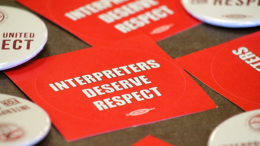
On a recent evening, Rica Highers arrived a little early to set up the community room inside the Ramsey County Library in Maplewood, where a group of interpreters were scheduled to meet the state’s top court administrator, Jeff Shorba, to discuss wages for independent spoken language interpreters working in district courts throughout Minnesota. While Highers, an organizer with the Minnesota Newspaper and Communications Guild, arranged the chairs, she kept an eye on the door, asking the incoming attendees — most of whom were Spanish, Hmong and Somali speakers — to either take buttons and stickers that read “INTERPRETERS UNITED FOR RESPECT” and “INTERPRETERS DESERVE RESPECT.” The meeting was the latest attempt to convince officials from the Minnesota Judicial Branch, which oversees courts in Minnesota, to adjust the current payment policy, which has barely budged in two decades. While members of the group awaited the arrival of Shorba, they turned to each other in twos and threes for small talk about the weather, work and the library — as if they were at a cocktail party. Once Shorba made his entrance, though, the mood changed. There were no greetings or smiles. Shorba sat on one side of the room, the interpreters…


Ask a Muslim Scholar November 2018

Question: What do you do with papers that have prayers written on them that come in the mail (i.e. Ramadhan schedule, etc.) after you are done with them? Do you throw them away, or do you burn them? Answer: Once we are done with papers or magazines with writings of Qur’anic verses or prayers or names of Allah, etc. we must not simply throw them or discard them as we would do with any other ordinary stuff; rather we must dispose them off in a respectable manner. The ideal way of disposing such materials off is by shredding them and then trashing them. If that is not possible, then the next best thing to do is to trash them after cutting and slicing them into tiny pieces. Burning is not recommended as it may be highly risky especially indoors. If, however, it is extremely safe to so, and, once done under strict supervision, there is no harm in burning them. Question: Is visiting the graveyard on Eid-ul-Fitr considered Bid’ah or Sunnah? Answer: Visiting graves is a great sunnah of the Prophet, peace be upon him; there is no fixed time limit for it, one is free to do so any…


New U of M report provides assessment of U.S. refugee resettlement organizations

A lot has been said about the policies and politics that affect refugee arrivals in the U.S. But according to Damir Utržan, a post-doctoral fellow at the University of Minnesota, there hasn’t been enough information about refugee resettlement agencies — the organizations responsible for resettling and supporting immigrants and refugees in America. So to understand the effectiveness of those groups — as well as their interactions with supporters and opponents of refugee admissions — Utržan and two other researchers at the university recently released a report chronicling the history and services of the U.S. Refugee Resettlement Program (USRP). The report, which surveyed more than 70 leaders of organizations nationwide, focuses on the resettlement of Syrian refugees and how today’s polarized political climate has created widespread opposition against immigrants and refugees. USRP is a federal program that has for decades collaborated with many domestic and international agencies to provide refugees with resettlement services and assistance to integrate them into U.S. society. Those services include housing and temporary cash assistance for paying rent and buying food. The organizations also connect refugees to health care, job training and education services in an effort to help them become self-sufficient. Though the U.S. has long admitted the largest…


SHEEKO SOOMAALI

Soomali-du waxay ku maah-maadaa “MAR-MARSIINYO MAARO MA LE”   Qofku hadduu mar kasta wax ku mar-marsoodo looma taag helayo.  Hase yeeshe, mar baa jirta qofku aanu heli Karin meel uu ka baxo ama wax uu ku mar-marsoodo. Habar Soomliyeed oo beri hore  baadiyaha ku nooleeyd ayaa marka gurigeeda loo soo martiyo waxay oran jirtey,”neef baanu idiin qali lahayn biyo la’aan ayaa na haysta.” Odeygii qabay ayaa wax badan kala hadlay in ay joojiso mar-marsiiyadan tirada ka badan. Waxa la waayey hal qof oo  u soo hoyday habarta reerkeeda  oo ay soortey(marti gelisey). Odeygii qabay ayaa aad iyo aad ula yaabay. Wax uu ku hadlo ayuu garan waayey. Qof kasta oo soo martiya iyadaa hadalka kaga horeyneysa odeyga. Markiiba way u dayrineysaa.  In badan odeygu wuu la hadlay. Habrtu way iska-dhega tirtay si kasta oo uu odeygu wax ugu sheego-ba. Waxa la gaarey heer ay wada hadli waayaan.  Odaygu wuxuu arinkan u arkay mid ceeb ku ah reerkan uu madaxa ka yahay.   Mar ayey maskaxdiisa ku soo dhacday in uu iska furo.  Hadana caruurtan bdan ee ay u hayso ayuu is yiri hoyadood ha ka eryin.  Caruurta waaa weyn arinkan habarta wuu u sheegey. Waxay ku yiraahden “abo iska daa hooyo…


The Benjamin B. Ferencz Young Fellows in Human Rights and Law

(St. Paul, MN; June 8, 2018) World Without Genocide announces a new youth advocacy and action program, the Benjamin B. Ferencz Young Fellows in Human Rights and Law. Fellowships will be awarded to five Summer Institute students who have participated in the 2018 Institute, Climate Change and Genocide: Sexual Violence and Disaster. Students will work on core areas of human rights including advocacy, communications, education, and outreach to support initiatives at city and state levels in the 2018-2019 academic year. High school and college students are encouraged to apply. More information is available at www.worldwithoutgenocide.org/about-us/young-fellows or 651-695-7621. World Without Genocide promotes education and action to protect innocent people, prevent genocide, prosecute perpetrators, and remember those affected by genocide.  


As More Muslims Run for Office in Minnesota, Some Encounter a Backlash

Two months ago, Fardousa Jama did something no other Muslim woman in south-central Minnesota has done: she filed to run for a city council seat in Mankato. Then on the Fourth of July, Jama took to the streets with her 8-year-old niece, Mai, for a door-knocking campaign, an experience she hoped would help her better connect with area constituents and learn more about issues that are important to them. But a few minutes into the effort, one thing became apparent to Jama: going door-to-door in Mankato might be a lot more difficult for a Somali-American, hijab-wearing female candidate like her than she had imagined. More than once, Jama said, people she solicited for votes responded to her with racially charged comments — “go back to where you came from” and “we don’t support a terrorist” — before slamming the door in her face. Worse yet, she added, an elderly white man even spat on her before telling her to get off his property. After the spitting incident, Jama decided she didn’t want her niece to see the mistreatment she endured. So Jama quickly returned home to rethink her campaign strategy. Jama’s experience isn’t uncommon among Muslim American candidates seeking political…


Ask a Muslim Scholar September 2018

Q: Is it ok if I memorize the Quran using a transliteration? A: It is not at all advisable or recommended to memorize the Qur’an by simply relying on transliteration; it may even be wrong to do so, since it may condition oneself to making major mistakes in reading/pronunciations and thus one may end up distorting the noble Qur’an. The Qur’an properly should be learned from the mouth of a qualified teacher. In the event of someone not being readily available, the next best thing to do is to buy a taped recitation of a well known Qaari (reciter) and follow his recitation for practice. In the modern world, since there are numerous teaching aids are available in the form of videos or cassettes or computer software, there is no excuse for people for relying on transliteration. Remember, once we condition ourselves in reading the wrong way, it would be very hard to unlearn it. Therefore, we might as well begin it right. Although a little hard in the beginning, practice, InshaAllah, will make it perfect. The Prophet, peace be upon him, assured us that when a person tries hard to learn the Qur’an, he receives great rewards. Allah says, “Verily,…